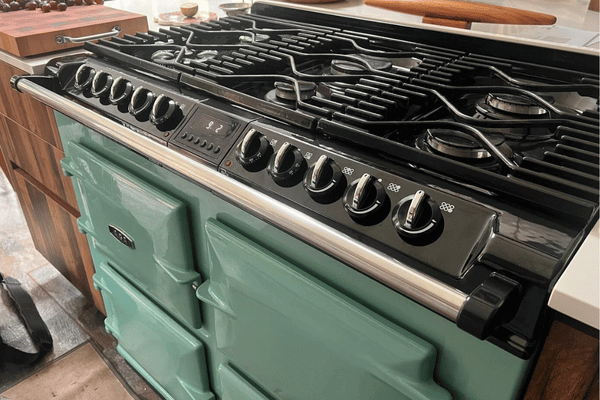
Keeping your AGA clean isn’t difficult once you know the right approach. Regular cleaning helps maintain heat efficiency, protects the enamel finish and keeps your kitchen looking its best. This guide explains how to clean the main parts of your cooker safely and effectively.
Before You Start
For a full clean, it’s best to work on your AGA once it has fully cooled down. This is usually done after the cooker has been turned off for summer, before servicing, or when planning a deep clean.
Turn the AGA off the night before and leave the doors and lids open to allow the stored heat to escape. By morning, the cooker should be cool enough to clean safely and comfortably.
If you’re unsure how to do this safely, see our guide on how to turn off your AGA range cooker.
If you’re only cleaning light spills or the lids, you can follow the same methods on a warm cooker, but take care not to use excess moisture.
You’ll need:
- A scraper with a sharp, flat blade
- A non-abrasive cleaning paste such as Astonish
- A microfibre cloth
- Fine wire wool or a sponge scourer
- Warm water and mild washing-up liquid
- Safety goggles and a vacuum or dustpan for debris
Avoid any acidic or harsh cleaners, as they can damage the enamel surface.
Cleaning the Enamel Surfaces
The enamel is tougher than it looks. To remove baked-on grease, hold the scraper blade flat against the surface and gently lift off residue from the top plate, lid rims and front panels. Replace the blade if it becomes blunt or nicked.
Once the surface is clear, apply a small amount of cleaning paste with a damp sponge. Work it in with circular movements until the grease lifts, then wipe clean with a damp cloth.
Finish by polishing the enamel with a dry microfibre cloth for a streak-free shine.
Cleaning the Hotplates
Remove the expansion rings around the hotplates if fitted. Use a blunt scraper or fine wire brush to remove any burnt-on carbon, then vacuum away the dust.
Wipe the surface with a damp cloth and a little washing-up liquid, taking care not to let water seep into gaps. Once dry, a thin wipe of olive oil on kitchen paper can help prevent rust on older hotplates.
Cleaning Chrome Lids
When cold, apply a pea-sized amount of chrome cleaner or non-abrasive metal polish to a soft cloth. Work gently in circular motions to remove grease and fingerprints.
Avoid using scouring pads or scraping tools on chrome, as these will scratch the finish. Once polished, buff with a clean dry cloth.
Spring Handles and Hinges
Spring handles tend to collect grease and dust. Remove them carefully, soak in warm soapy water for a few hours, then dry and refit.
While they’re off, check that hinge pins and washers are clean and secure.
Flue Shroud
The flue shroud lifts off on most models. It can often be cleaned in the dishwasher or soaked overnight in a solution of soda crystals and warm water. Rinse thoroughly and dry before refitting.
Ovens and Interior Cleaning
The cast-iron oven interiors can develop a thin layer of carbon over time. Once the cooker is cool, use a wire brush or scraper to remove loose debris. Vacuum up any dust, then wipe with a slightly damp cloth.
Never use caustic oven cleaners inside an AGA, as they can corrode the metal surfaces.
Regular Maintenance Tips
- Wipe spills as soon as possible while warm.
- Avoid acidic cleaners such as vinegar or limescale remover.
- Keep the lids closed when not in use to retain heat and reduce surface marks.
- Schedule a professional service annually to keep the cooker running at its best.
When to Call a Professional
If the enamel is chipped, stained or discoloured, re-enamelling can restore the finish and protect the metal underneath. Smart Range offers re-enamelling and full refurbishment services to bring older cookers back to life.
For professional cleaning, re-enamelling or servicing, contact Smart Range. We cover Surrey, Kent, Sussex and London